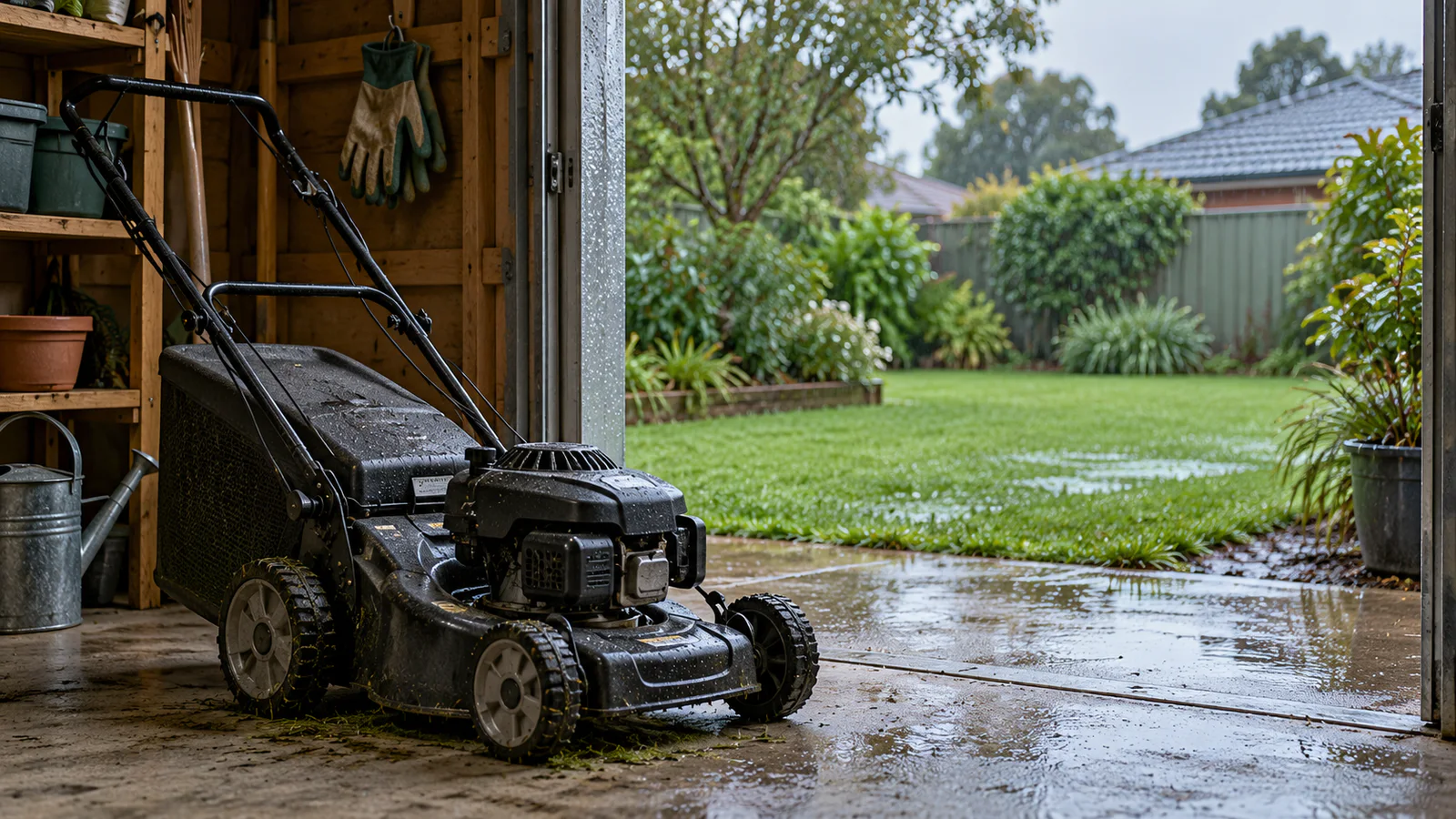
Make the missed mow and the next booking one decision
After rain cancels a recurring mowing visit, do not automatically promise the next dry day and leave the regular booking untouched. Check the site conditions, elapsed time, likely scope, access and the capacity you can genuinely support. Then agree whether the work becomes a separate catch-up, waits for the next regular visit or needs another specific plan.
There is no universal number of dry hours or single catch-up rule for every lawn. Grass type, growth, ground conditions, equipment guidance and the agreed service all matter. During severe-weather warnings, put safety first and follow the relevant official advice rather than trying to clear a backlog.
Copy this rainout decision sheet
Use one line for every affected property. The sheet works in a diary, spreadsheet or job system and keeps the decision separate from route estimates.
- •Missed visit date and last completed visit
- •Next regular booking already in the diary
- •Current condition and scope that still need reassessment
- •Essential access or customer timing constraint
- •Proposed action: separate catch-up, keep next visit, or hold for reassessment
- •Realistic mowing, edging, set-up, clean-up and travel allowance
- •Customer agreement and what happens to the next regular booking
- •The next update time if conditions remain uncertain
Choose one of three clear outcomes
Use the option that matches the conditions, customer agreement and capacity you can actually support.
- •Separate catch-up: use this only when the site is suitable, the customer agrees and the extra visit fits without displacing existing commitments.
- •Keep the next regular visit: agree that the missed visit will not create an extra booking, then reassess the scope and duration before that visit.
- •Hold for reassessment: give the customer a specific update time when conditions or access are still uncertain; do not make a premature promise.
A catch-up does not silently reset a recurring schedule. Record whether the following regular visit stays, moves or is cancelled, and make sure the customer has agreed to that exact outcome.
A fictional two-Tuesday example
A Tuesday visit is rained out. Friday looks possible, but the next regular Tuesday is still booked. Instead of leaving both dates implied, the operator checks conditions and capacity, then offers one clear choice: a Friday catch-up with the following Tuesday retained or moved by agreement, or no extra visit and a reassessed scope next Tuesday.
The dates are illustrative, not a recommended drying period. The useful step is resolving both bookings together before adding the proposed catch-up to the run sheet.
Send a specific customer update
A simple message is: “Today's visit is postponed because [specific condition]. I'll update you by [time]. I propose [visit]. Your next regular booking would [stay, move or be cancelled], subject to your agreement.” Avoid promising that every affected lawn will be completed tomorrow or asking the route plan to make the customer decision for you.
Check one proposed catch-up day in the free planner
Once customer decisions are recorded, enter one proposed day's addresses and realistic job durations in DayRoute's free web planner. Compare the estimated travel and route order with the work already confirmed, and leave a deliberate buffer. The planner does not assess whether a lawn is ready, change recurring bookings or contact customers.
As checked on 22 October 2026, email sign-in is required, a route can include up to 10 jobs and each account has 10 successful calculations. A successful recalculation uses another calculation. The free planner is separate from the paid iOS app and does not automatically transfer the plan into it.
Check one proposed catch-up day
Resolve each customer's missed and regular visit first, then compare one day's estimated travel and job durations. Email sign-in is required; the planner allows up to 10 jobs and 10 successful calculations per account.
Related pages
Sources and scope
- Public lawn-care discussion — wet-weather backlogReviewed 22 October 2026. A qualitative account from a US operator about delayed lawns and a narrow dry period. It is not Australian prevalence, pricing advice or evidence of customer outcomes.
- STIHL Australia — lawn mowing guidePublished 30 June 2026 and reviewed 22 October 2026. Supports reassessing wet grass, growth and equipment considerations rather than using one fixed interval; it does not prescribe this business workflow.
- Comcare — cyclones and thunderstormsReviewed 22 October 2026. Australian workplace guidance supports delaying outdoor work and travel when severe-thunderstorm conditions require it. It does not set a lawn-drying timetable.
- DayRoute — Free field-service day plannerReviewed 22 October 2026 for current sign-in, calculation and job limits. The planner estimates travel and job order; it does not assess lawns, change recurrence or contact customers.
- DayRoute — Product factsReviewed 22 October 2026. Separates the bounded free web planner from paid iOS app workflows. It is direct product evidence, not independent proof of business results.